If you think travel is all about ticking off landmarks and taking pretty photos, you might be missing its most rewarding qualities. For me, wayfinding means looking at travel as more than a map and a schedule—it is an ongoing journey of connecting with people, accepting discomfort, and breaking through preconceptions. Wayfinding is both an ancient method of navigation and a philosophy for how we move through the world, and diving into its history and practice has fundamentally changed how I approach travel and life alike. This theme came up on a recent crossover episode with Armchair Explorer, where curiosity and vulnerability led my adventures from the Costa Rican jungle to Benin, Morocco, and beyond. Through these stories, I realized the path of discovery lies not in following an itinerary, but in opening up to experience, especially when it unsettles or surprises you. Hear how this philosophy shapes real journeys.
Key points
- Wayfinding goes beyond navigation—it’s a mindset and philosophy of travel.
- Meaningful experiences often happen when you welcome discomfort and unpredictability.
- Breaking through stereotypes can lead to profound personal growth.
- Deep connections form when you engage honestly, even with unfamiliar cultures.
- Small adventures close to home can be as transformative as distant journeys.
What is wayfinding in travel?
Wayfinding, as I see it, is rooted in the traditions of ancient Polynesian navigators, who found their way across the Pacific Ocean without compasses or GPS by reading the stars, the wind, the ocean, and generations of passed-down wisdom. But it is also a metaphor for a style of travel—and living—that depends on curiosity, intuition, and openness to the world. In the Armchair Explorer episode, I shared why the show’s name resonated so deeply with me. It’s not simply about finding your way from A to B, but about being receptive to the lessons and connections that arise along the journey. As I put it, “Travel is a mirror. It shows you the thing you need to see.” Listen to this part.
Whether I’m landing in Costa Rica or exploring somewhere utterly new, wayfinding pushes aside rigid plans in favor of instinct, observation, and yes, a little playful luck. I believe that anyone can experience transformative travel—across oceans or just down the road—if you’re prepared to be changed by what you encounter, not just entertained or comforted by what you expect.
How discomfort leads to growth
Real travel is often uncomfortable, and I have come to see that as a gift. Culture shock, awkward moments, and even genuine fear can all be invitations to grow. I remember landing in Costa Rica, having come for “luxury resort work” but needing something more authentic. When I followed my instincts and set off on a bike, a simple interaction—helping a stranger retrieve her phone—sparked a connection that reminded me why I travel: to open up to genuine human contact, even when it starts with a little friction hear the full story.
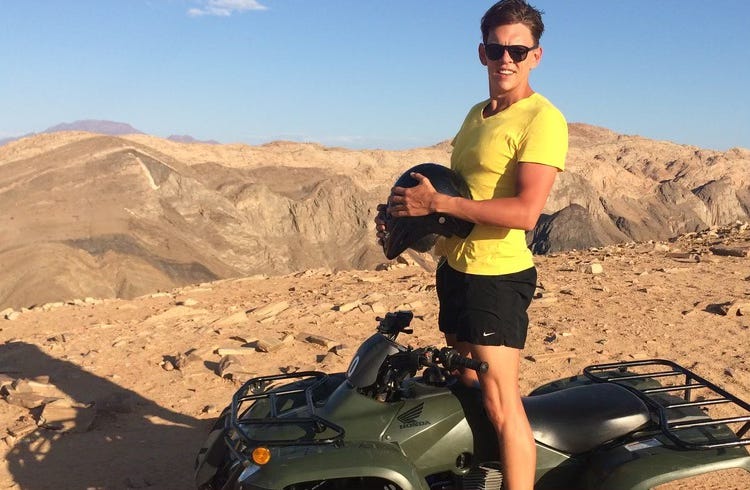
I’ve dealt with much bigger challenges too, from being bitten by a scorpion near the Angola-Namibia border (with a tribal leader saving my life) to attending a voodoo ceremony in Benin and feeling completely alien to everyone around me. Each time I’ve felt out of my depth or uncomfortable, I’ve had the opportunity to learn—about myself, about the world, about the limits of my assumptions. Facing discomfort isn’t easy, but from my experience, it’s the price of meaningful transformation.
Letting go of travel stereotypes
Travel marketing tends to sell us a narrow idea of what adventure looks like, but the real magic happens when you experiment with your expectations. Sometimes, people travel to a place because it’s on a checklist or appeared on a magazine cover, only to find they feel nothing on arrival. As I described in the podcast, the problem comes from following someone else’s idea of travel instead of your own curiosity listen to this insight. Trusting your instincts and letting go of preconceptions opens up space for surprise, connection, and renewal.
For me, the most valuable journeys aren’t necessarily remote or dangerous—they can be a short drive away. What matters is your willingness to go beyond the surface, to let your idea of a place evolve. I encourage everyone to skip the script sometimes and embrace the unpredictability of real exploration.
Breaking down preconceptions through connection
One of travel’s richest lessons is that people are more complicated, generous, and surprising than the headlines about a place. I felt this in memorable moments everywhere from Saudi Arabia—where I learned that warmth and kindness can cross enormous cultural gaps—to small country stores in Tennessee, where politics might differ but a shared meal creates common ground hear the conversation.
Travel invites us to have uncomfortable conversations, to engage deeply, not just with people we pay or with tourist guides, but with anyone willing to share a part of themselves. These encounters—sometimes awkward, often illuminating—remind me that understanding the world (and myself) means speaking honestly, listening closely, and challenging my inherited beliefs.
When travel changes you
Every journey has the potential to become more than a holiday if you open up to it fully. For me, the most profound shift comes from accepting the unknown, facing fear, and allowing yourself to be vulnerable. Whether that’s surviving a dangerous encounter in Africa or reflecting on South Africa’s complicated history, I’ve come to see that wayfinding isn’t just about moving through geography—it’s about moving through life. The land, the people, even the uncomfortable questions—they all push me forward, shaping who I become listen to this memory.
Real wayfinding asks us to stay receptive and self-aware, to seek the lessons that discomfort and openness can bring, and to keep moving—both on the road and within ourselves.
Common questions
What is the difference between wayfinding and traditional navigation?
Wayfinding is based on intuition, sensory observation, and inherited knowledge, unlike modern navigation, which uses tools like maps and GPS. In the context of travel, it also means approaching journeys with curiosity rather than detailed plans.
How can I practice wayfinding without leaving my country?
Wayfinding is about your mindset, not your mileage. It means seeking out new experiences, embracing uncertainty, and engaging authentically with people and places, even within your own city or region.
Why does discomfort make travel more meaningful?
Discomfort pushes you beyond familiar boundaries and challenges your assumptions. When you work through culture shock or vulnerability, you have the chance to learn and grow, making the memory and impact of your journey deeper.
How do I move past stereotypes and get real cultural connection?
Let go of expectations and be genuinely curious. Talk to people without an agenda, allow yourself to feel uncomfortable, and listen more than you speak. The richest connections come when you’re open and present in the moment.

Join Wayfinder: Life-Changing Travel
Get new posts by email, and choose the topics you want.
Get in Touch
Send a message about partnerships or press.